Prolotherapy
Prolotherapy for tendon and ligament complaints
In prolotherapy, irritant solutions are injected precisely at tendon and ligament attachments. The aim is to set a healing stimulus in the tissue. It is mainly considered for persistent tendon and ligament complaints when other conservative measures have not helped enough.
What is it?
A stimulus for the tissue
In prolotherapy, an irritant solution, often a dextrose (glucose) solution, is injected with a fine needle at the painful tendon and ligament attachments. The stimulus is intended to activate the body’s own repair processes in the tissue.
Treatment is usually given as a series and combined with stretching, strengthening and graded loading.
Who is it suitable for?
- Persistent tendon attachment complaints, e.g. tennis and golfer’s elbow, Achilles tendon or the tip of the kneecap
- Ligament laxity or recurring irritation of joints (after examination)
- Complaints of the spine and pelvis, e.g. the sacroiliac joint (after examination)
- Patients for whom physiotherapy and other conservative measures have not helped enough
Whether the treatment makes sense in your case can only be assessed after an examination.
Process
How the treatment works
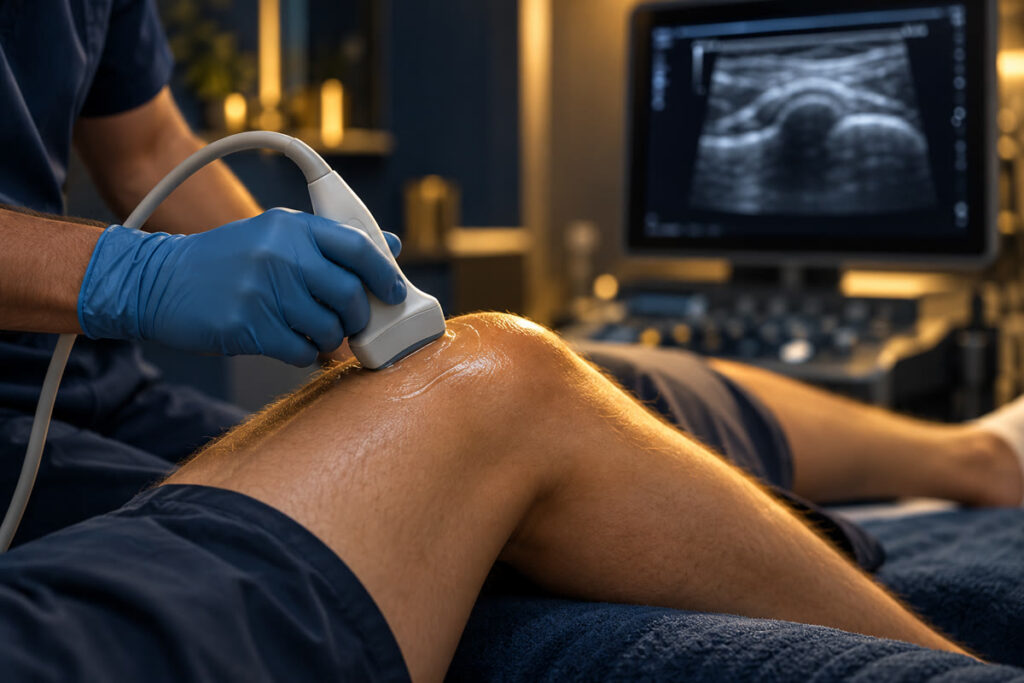
Step 1
Examination
Clinical examination, ultrasound and, if necessary, X-ray to assess whether prolotherapy is suitable for you.
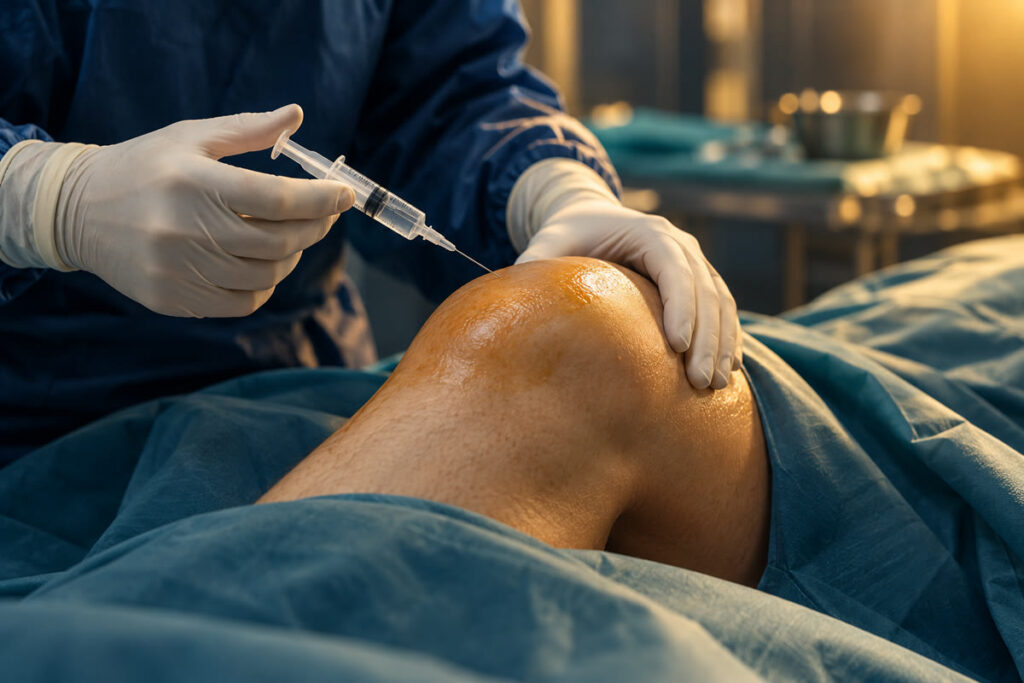
Step 2
Injection
Sterile technique, several small injections at the affected tendon and ligament attachments – ultrasound-guided if needed.
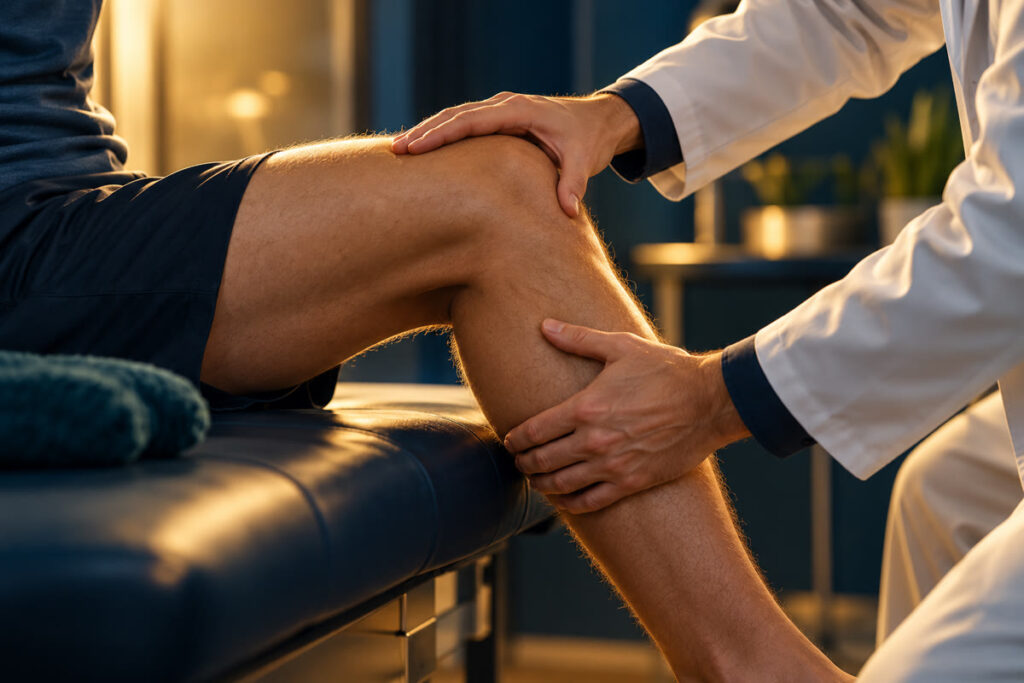
Step 3
Series & follow-up
Usually several sessions a few weeks apart, followed by a follow-up check.
Honestly informed
Limits & possible side effects
The scientific evidence for prolotherapy is limited. The effect varies from person to person and cannot be guaranteed. Temporary tenderness, swelling or a feeling of tension at the injection site may occur. Infections, bruising or allergic reactions are rare. The treatment does not replace surgery where surgery is medically necessary.
Costs
This service is usually billed as a self-pay service (IGeL) according to the German medical fee schedule (GOÄ). Private health insurers often cover the costs in full or in part – please clarify this with your insurer beforehand. For price enquiries, please contact the practice OC OrthoChirurgie.
FAQ
Frequently asked questions
How quickly does prolotherapy work?
A change often only becomes noticeable after several weeks and several sessions. This varies from person to person.
Is the treatment painful?
The injections can be briefly uncomfortable. Afterwards the treated area may feel tender for a few days.
How many sessions are needed?
This depends on the findings. Several sessions a few weeks apart are usual. We will discuss this together.
Does health insurance cover the costs?
Statutory health insurance does not usually cover prolotherapy; it is billed as a self-pay service. Private insurers often reimburse it in full or in part – please check with your insurer beforehand.
How does it differ from autologous blood therapy (ACP/PRP)?
Autologous blood therapy uses processed plasma from your own blood, while prolotherapy uses an irritant solution. We decide which method suits you after the examination.
Appointment
Tendon or ligament complaints? Let’s discuss the options
In a consultation we assess whether prolotherapy makes sense for you.
For prescriptions, test results, referrals, price enquiries and all organisational questions, the team of OC OrthoChirurgie is there for you: info@oc-orthochirurgie.com · Ludwigshafen 0621 53399050 · Mutterstadt 06234 928850-0