Trauma surgery
Trauma surgery – care after injuries
A fall during sport, a twisted ankle on the stairs or an accident in everyday life: injuries to bones, joints, ligaments and tendons need careful diagnostics and treatment that suits you. As a specialist in orthopaedics and trauma surgery and a specialist in general surgery, Irfan Halaceli treats accident injuries conservatively and – if necessary – surgically.
My approach
Examine precisely first, then decide together
Not every injury needs surgery. Many fractures, bruises and ligament injuries can be treated well with immobilisation, splints, tape and targeted physiotherapy. If an operation makes more sense, I explain openly why – and which alternatives exist.
X-ray and ultrasound are available in the practice for diagnostics; if necessary I arrange further examinations such as MRI or CT.
Common accident injuries
- Bone fractures (e.g. wrist, ankle, metacarpal, ribs)
- Ligament injuries of the ankle (“twisted ankle”)
- Injuries of the knee, meniscus and cruciate ligament
- Tendon injuries (e.g. Achilles tendon)
- Bruises, strains and sprains
- Cuts and lacerations
Treatment
From first aid to return to everyday life
Conservative
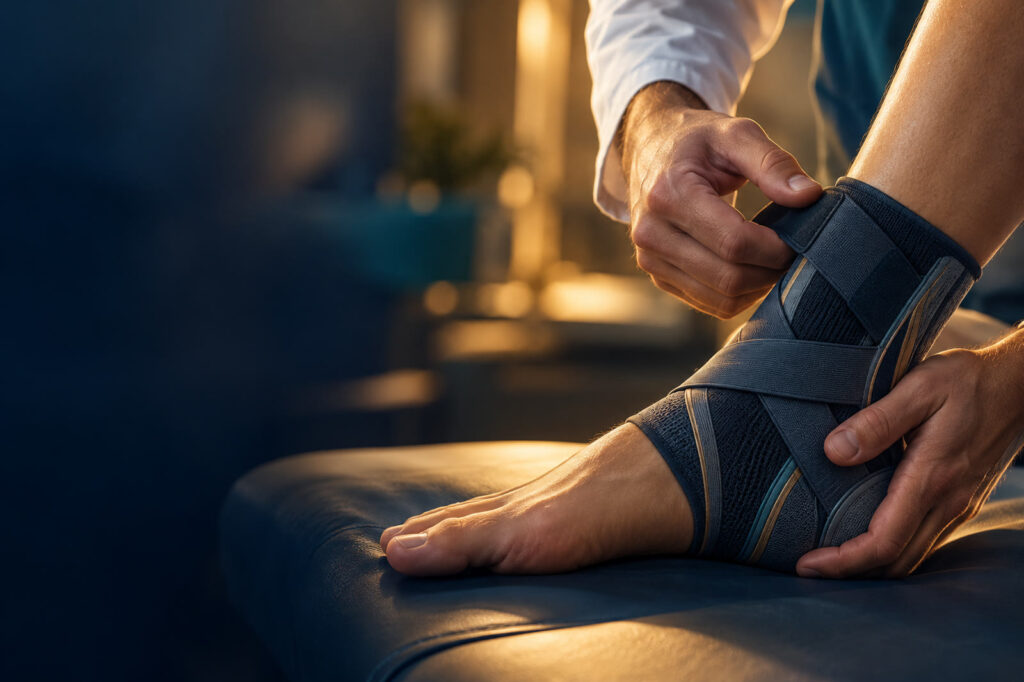
Immobilisation with cast, splint or orthosis, taping, pain therapy and physiotherapy – depending on the findings.

Surgical
Outpatient procedures at the practice or the Apollonia Klinik. I perform larger operations once a week at a partner hospital.
Aftercare
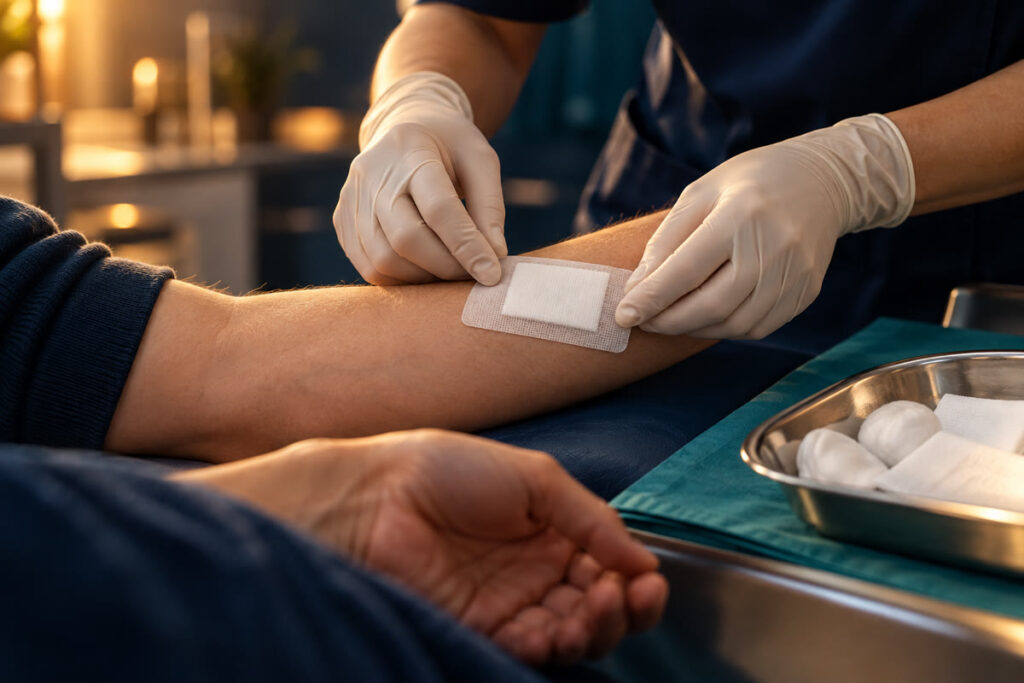
Follow-up examinations, wound care, X-ray checks and – after bone fractures – the question of whether inserted metal should be removed later.
Work accident?
Accident at work, at school or on the way there
Then I am here for you as an approved accident-insurance consultant (D-Arzt). In this case the costs are covered by the statutory accident insurance. More about the D-Arzt procedure
FAQ
Frequently asked questions
Does a bone fracture always have to be operated on?
No. Many fractures heal well with immobilisation. Whether an operation makes more sense depends, among other things, on the location and position of the fracture, your age and your demands on the joint. We discuss this after the examination.
I twisted my ankle – when should I see a doctor?
If the joint swells severely, you can hardly or not at all put weight on it, or the complaints do not improve significantly after one to two days, you should have it examined.
Can I also get a second opinion after an injury?
Yes. Especially if an operation has been recommended to you, a second opinion can help you make the decision with more confidence.
Appointment
Discuss in person what is right for you
Whether and which treatment makes sense for you can only be assessed after an examination. You can book an appointment with Irfan Halaceli directly online via Doctolib. Consultations are available in German, English, Turkish and Arabic.
For prescriptions, test results, referrals, price enquiries and all organisational questions, the team of OC OrthoChirurgie is there for you: info@oc-orthochirurgie.com · Ludwigshafen 0621 53399050 · Mutterstadt 06234 928850-0